
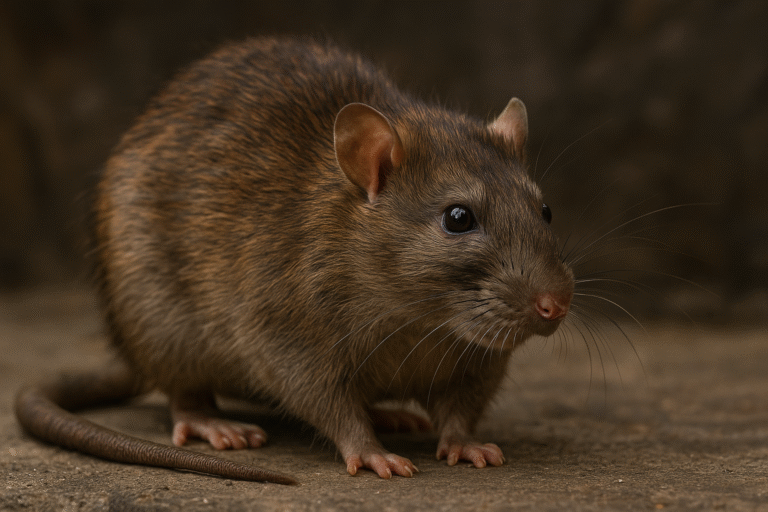
The brown rat, scientifically known as Rattus norvegicus, is one of the most widespread rat species worldwide. Originally native to northern China, it has spread to almost every part of the world, including Europe and North America. This species is particularly adapted to thrive in urban environments, where it is often found in sewers and buildings. The brown rat is characterised by its brownish or greyish fur, a body length of up to 28 cm, and a tail that is slightly shorter than the body. Its ability to adapt to different environments makes it an effective survivor in both rural and urban areas.
Being able to recognise the signs of brown rats is crucial to prevent bigger problems. Typical signs of presence include gnawing marks, droppings and noises from the ceiling or walls. To prevent rat problems, it is important to ensure that the home is well protected against intrusion. This can be done by sealing cracks and holes, storing food properly and keeping the surroundings clean and tidy. Regular property inspections can also help with early detection of rats, allowing for quick action before the problem escalates.
The brown rat is known for its remarkable adaptability and rapid reproduction, making it a formidable survivor in urban environments. This species is omnivorous and can feed on a wide variety of foods, making it easier for it to thrive in densely populated areas. Rats are nocturnal and spend most of their time searching for food and shelter, which often brings them into close contact with humans. Their social structure is complex and they often live in colonies, which can turn a minor problem into a major challenge if not dealt with quickly.
Brown rats can be carriers of various diseases that can be transmitted to humans through contact with their faeces, urine or bites. Diseases such as leptospirosis, salmonella and hantavirus are among the most well-known that can be spread by rats. In addition to health risks, brown rats can also cause significant damage to buildings and infrastructure. Their tendency to gnaw on everything from electrical cables to woodwork can lead to serious structural damage and fire hazards. This emphasises the need for effective preventative measures and quick action if rats are detected.
Preventing rat infestations starts with minimising the resources that rats seek. This includes proper food storage, regular waste disposal and maintaining the structural integrity of the property. Sealing cracks and holes, especially around pipes and foundations, can prevent rats from gaining access to buildings. In addition, it's important to keep the surroundings clean and free of clutter, which can act as hiding places. Rat control professionals can offer advanced solutions that not only remove existing rats, but also secure against future infestations through long-term strategies.
The brown rat, with its remarkable adaptability and rapid reproduction, is a formidable survivor in urban environments. This species is omnivorous and can feed on a wide variety of foods, making it easier for it to thrive in densely populated areas. Rats are nocturnal and spend most of their time searching for food and shelter, which often brings them into close contact with humans. Their social structure is complex and they often live in colonies, which can turn a minor problem into a major challenge if not dealt with quickly.
Brown rats can be carriers of various diseases that can be transmitted to humans through contact with their faeces, urine or bites. Diseases such as leptospirosis, salmonella and hantavirus are among the most well-known that can be spread by rats. In addition to health risks, brown rats can also cause significant damage to buildings and infrastructure. Their tendency to gnaw on everything from electrical cables to woodwork can lead to serious structural damage and fire hazards. This emphasises the need for effective preventative measures and quick action if rats are detected.
Preventing rat infestations starts with minimising the resources that rats seek. This includes proper food storage, regular waste disposal and maintaining the structural integrity of the property. Sealing cracks and holes, especially around pipes and foundations, can prevent rats from gaining access to buildings. In addition, it's important to keep the surroundings clean and free of clutter, which can act as hiding places. Rat control professionals can offer advanced solutions that not only remove existing rats, but also secure against future infestations through long-term strategies.
At Rattech, we provide professional rat control and prevention for both private and commercial customers. Our experts are ready to help secure your home or business against rat infestation so you can feel safe and secure. Contact us today for a thorough inspection and a customised solution to suit your needs.
Rats in the sewer can be detected by sounds from drains, odours or by seeing rats at manhole covers. Professional inspections can also reveal the presence of rats in the sewer system.
Typical signs of rat activity include gnawing marks, droppings, footprints, nesting and noises from walls or ceilings. It's important to react quickly if you suspect rats.
To prevent rats from entering the house, seal cracks and holes, store food in tightly sealed containers and keep the surroundings clean. Regular property inspections can also be an effective preventative measure.