
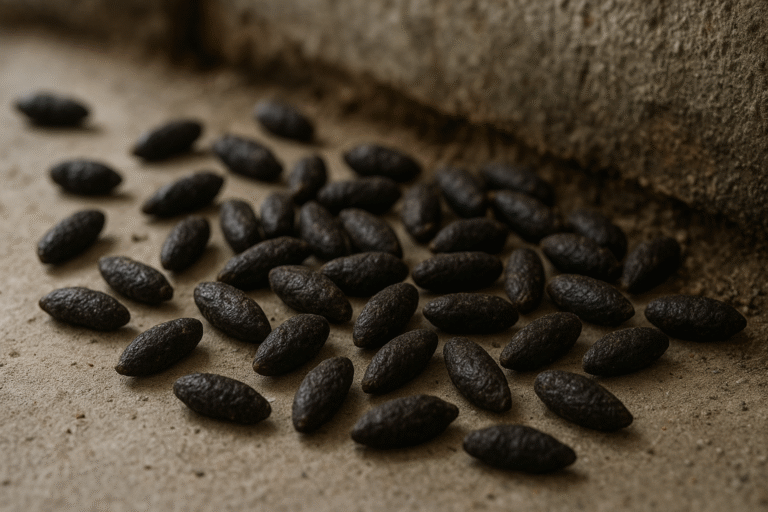
Rat droppings are a clear indicator of rat presence and can help identify a potential pest problem. Typical rat droppings are around 17 mm long and 6 mm thick, black or brown in colour, and have a cylindrical shape with a blunt end. Rats tend to concentrate their faeces in specific places, which distinguishes them from mice that scatter their faeces more randomly. Being able to distinguish between rat and mouse droppings is important as it can be crucial for choosing the right control method.
Being able to identify rat droppings is crucial to assess the extent of a rat infestation. As a single rat can deposit between 40 and 60 droppings per day, the amount of faeces can give an indication of the number of rats in the area. Furthermore, the location of the droppings can reveal where the rats are staying and where they have access to the property. Understanding these patterns can help identify hiding places and access routes, which is essential for effective control.
Rat faeces pose a significant health risk as they can contain pathogenic bacteria and viruses, such as leptospirosis and salmonella. These diseases can be transmitted to humans through direct contact with the faeces or indirectly through contaminated surfaces. Therefore, it is important to handle rat faeces with great care and use appropriate protective equipment when cleaning. Understanding the potential health risks can motivate quick action and prevent further spread.
The discovery of rat droppings in the home requires immediate attention as they can be a source of serious health risks. First and foremost, it is important to contact an authorised pest control professional who can assess the extent of the problem and suggest appropriate solutions. In the meantime, protective equipment such as gloves and masks should be used when handling the excrement to minimise the risk of infection. Disinfection of the affected areas is essential to prevent the spread of bacteria and viruses.
The location of rat droppings can reveal where rats access the property and where they spend the most time. Droppings are often found near food sources or along rat paths, which can indicate their movement patterns. By analysing these patterns, you can identify potential entry points, such as faulty sewers or damaged pipes that allow rats to enter. Understanding these entry points is crucial to sealing them and preventing further intrusion.
Prevention is a key component in dealing with rat problems. An effective strategy includes both structurally securing the property and maintaining hygiene levels. To reduce the attraction of rats, ensure that food is stored in tightly sealed containers and waste is disposed of regularly. In addition, installing physical rat proofing, such as netting over vents and doors, can help prevent rat access. Regular inspection of the property exterior can also help detect and repair potential entry points.
Rattech offers comprehensive solutions that focus not only on acute rat control, but also on long-term prevention. Our methods include advanced monitoring technology that can track rat movements and identify problem areas. We also advise on structural changes that can strengthen a property's resistance to rats. By combining these strategies with regular follow-up, we can ensure that the risk of future rat problems is effectively minimised.
Rat droppings play a key role in identifying rat problems in buildings. Not only are they a visible indicator of rat presence, but they can also reveal information about rat habits and movement patterns. The droppings are often placed in specific locations that rats use as “toilet areas”, which can indicate their favourite routes and hiding places. By understanding these patterns, you can more accurately identify where rats access the property and where they spend the most time.
The condition of the droppings can provide further insight into rat activity. Fresh droppings are typically shiny and moist, while older droppings become dry and dull. This difference can help assess how recently rats have been active in the area. A strong or sewer-like odour may also be present, which could indicate a larger amount of droppings or a prolonged presence of rats. These observations are important in order to take the right steps towards effective rat control.
It is important to distinguish between rat and mouse faeces as they require different control strategies. Rat droppings are significantly larger, typically 17 mm long and 6 mm thick, while mouse droppings are only 3-5 mm long and as fine as the tip of a ballpoint pen. Rat faeces are also cylindrical with a chubby end, which distinguishes them from the mouse's more scattered and randomised placement. Being able to identify correctly can help target control efforts and ensure a more effective solution.
Handling rat excrement requires care to minimise health risks. It is essential to use protective equipment such as gloves and masks to protect against potential pathogenic bacteria and viruses. After removing the faeces, the area should be thoroughly disinfected to ensure that all traces of bacteria are removed. It is also important to contact a professional exterminator to ensure the problem is dealt with effectively and to prevent future infestations.
Prevention is an essential part of a long-term strategy against rat problems. Structural property security, such as checking and repairing potential entry points like faulty sewers and pipes, is essential. In addition, installing physical rat-proofing such as nets and barriers at doors and vents can help prevent rat access. Regular inspection and maintenance of your property's exterior can help detect and fix weaknesses before they become entry points for rats.
At Rattech, we provide professional rat control and prevention for both private and commercial customers. Our experts are ready to help assess and manage rat problems effectively so you can secure your home or business against rats. We also offer advice on long-term solutions to minimise the risk of future problems.
Rats can often be detected in sewers by signs such as gnawing marks, droppings and a characteristic sewer odour. Professional inspection can help identify the presence of rats.
Rat droppings are larger, typically 17 mm long and 6 mm thick, while mouse droppings are only 3-5 mm long. Rat droppings are cylindrical in shape with a blunt end.
When cleaning rat faeces, gloves and masks should be used to protect against health risks. The area should be thoroughly disinfected after removing the faeces.
A professional can assess the extent of the problem and ensure it is handled correctly. This minimises health risks and prevents future infestations.