
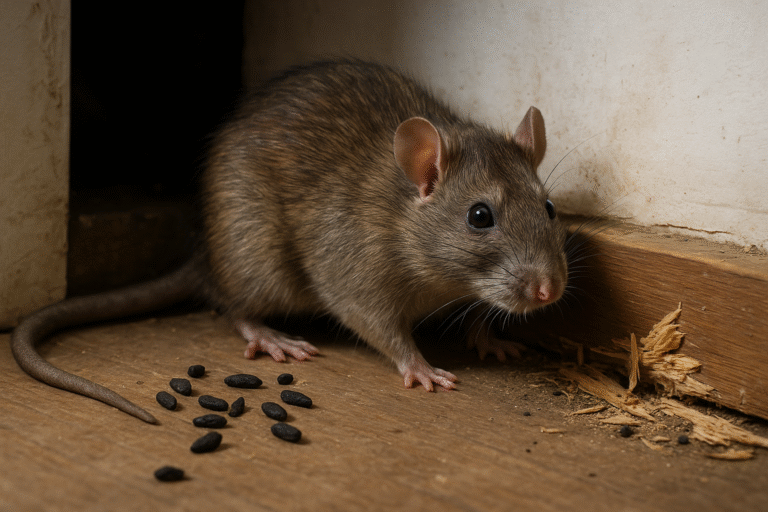
Rats can often reveal their presence through a number of obvious signs. One of the most common indicators is sounds such as scratching and running, typically heard at night. These sounds can come from walls, ceilings or under floors. Additionally, droppings are a sure sign of rats; they are black, cylindrical and often found in cupboards or along walls. Another indication can be gnawing damage to materials such as wood, cables and insulation. An ammonia-like odour emanating from rat urine can also warn that rats are nearby.
To effectively detect rats in the home, it's important to know where to look. Rat nests can be found in hidden areas where materials like insulation and paper are piled together. Visible signs such as foot and tail marks in dust or flour can also provide clues to rat activity. Pets can often react to the presence of rats by showing particular interest in certain areas of the home. If your pet suddenly becomes focussed on a particular spot, it may be worth investigating further.
Rats pose significant health and building risks. They can carry diseases that can be transmitted to humans, making them a serious health threat. Their tendency to gnaw on wires can also cause electrical fires, posing a significant danger to both people and property. In addition, rats can cause structural damage to buildings, which can lead to costly repairs. It is therefore important to take rat infestations seriously and act quickly to minimise the damage.
The presence of rats in the home can have far-reaching consequences that extend beyond the immediate signs of their activity. Their ability to spread diseases such as leptospirosis and salmonella pose a direct health risk to residents. These diseases can be transmitted through contact with rat urine or faeces, making it crucial to identify and manage rat problems quickly. Furthermore, rats can cause allergic reactions in some people, further emphasising the need for effective rat control.
In addition to the health risks, rats can also cause significant damage to the building's structure. Their constant need to gnaw can lead to damage to electrical wiring, increasing the risk of short circuits and potentially dangerous fires. They can also damage insulation, which can result in increased energy costs and uncomfortable temperature fluctuations in the home. Woodwork and other building materials are also not safe from rats, as their gnawing can compromise the integrity of the building over time.
Rats are nocturnal and prefer to stay in dark, hidden areas where they can move unnoticed. Typical hiding places include attics, basements, behind walls and under floors. These places give them access to the materials needed to build nests, often consisting of insulation, paper or fabric that they collect from their surroundings. To detect their presence, it's important to inspect these areas regularly for signs of activity, such as rodent damage or droppings.
To protect your home from rat infestation, it is essential to implement a combination of monitoring and preventative measures. This can include installing rat-proof barriers and regular inspection of potential entry points, such as cracks and holes in the building's foundation. By eliminating access to food sources and secure waste receptacles, you can also reduce the attraction of rats to your home. Maintaining a clean and tidy property is also important to minimise potential nests.
While it is possible to take some preventative steps yourself, a professional rat exterminator can provide a more comprehensive solution to a rat problem. Professionals have the expertise needed to identify and treat rat infestations effectively and safely. They can also advise on long-term prevention strategies to ensure the rats don't return. If you notice more signs of rats, such as persistent noises, strong odours or extensive damage, consider contacting a professional to avoid further complications.
Rats can be hard to detect before they've established themselves in your home. One of the most unmistakable signs of their presence is the sounds they make. Scratching sounds coming from walls, ceilings or under floors, especially at night, are often a clear sign. These noises are due to their activity when searching for food or building nests. If you hear such sounds, it could be an indication that rats have found their way into your home.
Another clear indication of rats is faeces. Rat droppings are typically black and cylindrical, with a length of around 1-2.5 cm. They are often found along walls, in cupboards or other places where rats roam. The droppings can be fresh or dry and their presence is a clear sign that rats are nearby. It's important to pay attention to these tracks as they can help localise rat movement routes.
Gnawing damage is also a common sign of rats. Rats have a constant need to gnaw to keep their teeth from wearing down. This can result in damage to woodwork, wiring, insulation and other materials. Distinct teeth marks are often visible on the damaged objects. These injuries can not only be cosmetic, but also pose a risk of electrical fires if wiring has been damaged.
The ammonia-like odour of rat urine is another sign that can indicate a rat infestation. This odour can be particularly strong in enclosed spaces or areas where rats have been for a longer period of time. In addition to urine, dead rats can also cause a rotting odour that can be hard to ignore. If you notice such an odour, it's important to take action quickly to identify the source.
Rat nests are often well hidden, but their presence can be revealed through materials such as insulation, paper or fabric gathered in piles. These nests are typically found in dark, secluded areas such as attics, basements or behind walls. Identifying and removing these nests is crucial to prevent rats from multiplying further.
Finally, pet behaviour can also give an indication of rats. Dogs and cats can often react to sounds or odours that humans don't notice. If your pet suddenly shows interest in a certain area of your home, it could be a sign that rats are nearby. It's a good idea to investigate these areas further to see if there are other signs of rat activity.
At Rattech, we provide professional rat control and prevention services for both residential and commercial customers. Our experienced team can help identify signs of rats and ensure that your home remains free of these pests. Contact us for a thorough inspection and advice on the best solutions for your needs.
Rats can often be detected in sewers using inspection cameras that can reveal their presence and movement routes. Professionals can also identify signs such as droppings or gnawing damage on pipes.
Rats are generally larger than mice and have longer tails and larger feet. Their droppings are also larger and more cylindrical than the small, pointed droppings of mice.
Rats are nocturnal, which means they are most active at night. This is because they feel safer in the dark and can move unnoticed when humans are sleeping.