
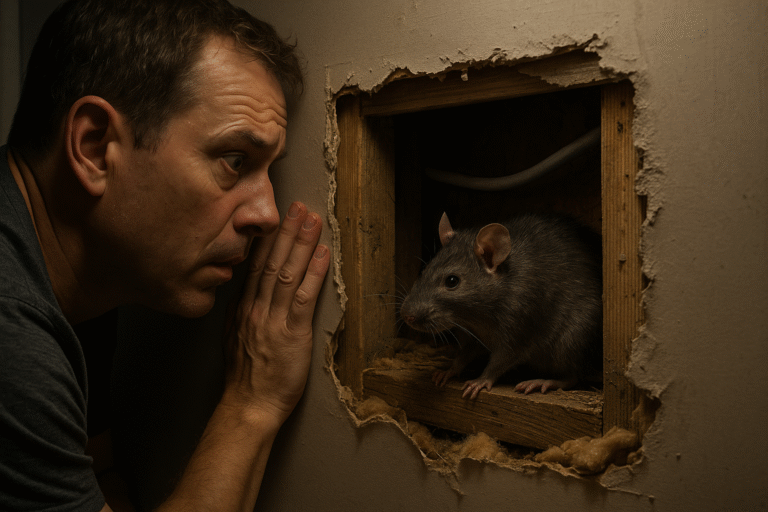
Rats in the wall can cause a variety of noises that are often evident at night. Scratching, scratching and scurrying are among the most common sounds that can indicate the presence of rats. It is important to be able to distinguish these sounds from those of other animals such as mice or raccoons in order to take the right steps to control them.
Besides the characteristic sounds, there may be other signs of rat presence, such as droppings that are typically 10-15 mm long, sewer-like odours, visible holes in walls and foundations, and damage to materials. These signs can help confirm the suspicion of rats in the home.
Rats are nocturnal pests, meaning they are most active in the hours after sunset. This behavioural tendency means that the sounds of rats in the wall are often most prominent at night. The characteristic sounds, such as scratching and scraping, occur when the rats are moving through the walls, searching for food or building a nest. These sounds can be unsettling for homeowners as they indicate that rats have established themselves within the structure of the house, which can lead to further damage and potential health risks.
Distinguishing between rat sounds and mouse sounds is crucial for proper identification and control. Rats generally produce louder and more distinctive sounds than mice, due to their larger size and more vigorous movements. Where mice often make more muffled, scurrying noises, rat scratching and scratching can be more insistent and deep. This difference in loudness and intensity can help homeowners determine what type of pest they are dealing with and therefore what control strategy to use.
The presence of rats in walls can have serious consequences for the structure of a building. Their constant gnawing can damage electrical wiring, increasing the risk of short circuits and potential fires. Furthermore, rats can cause damage to insulation materials and woodwork, which can weaken the integrity of the building over time. This type of damage emphasises the importance of quick and effective intervention once rats are suspected in the walls.
Prevention is a crucial part of an effective rat control strategy. Ensuring that all potential entry points to the home are closed can prevent rats from gaining access to the interior of the building. This includes sealing cracks in the foundation, installing rat traps in the sewer system and regularly inspecting the exterior of the home for signs of damage. A professional exterminator can offer a thorough assessment and suggest appropriate preventative measures to protect the home from future infestations.
Once rats have been identified in walls, it's important to act quickly to minimise damage and health risks. Professional exterminators, such as those at Rattech, can offer emergency assistance and utilise advanced methods to remove the rats effectively. Their expertise ensures not only that current rats are removed, but also that long-term solutions are implemented to prevent future problems. By combining emergency response with preventative strategies, a sustainable solution to rat problems can be achieved.
Rats are nocturnal pests, meaning they are most active in the hours after sunset. This behavioural tendency means that the sounds of rats in the wall are often most prominent at night. The characteristic sounds, such as scratching and scraping, occur when the rats are moving through the walls, searching for food or building a nest. These sounds can be unsettling for homeowners as they indicate that rats have established themselves within the structure of the house, which can lead to further damage and potential health risks.
Distinguishing between rat sounds and mouse sounds is crucial for proper identification and control. Rats generally produce louder and more distinctive sounds than mice, due to their larger size and more vigorous movements. Where mice often make more muffled, scurrying noises, rat scratching and scratching can be more insistent and deep. This difference in loudness and intensity can help homeowners determine what type of pest they are dealing with and therefore what control strategy to use.
The presence of rats in walls can have serious consequences for the structure of a building. Their constant gnawing can damage electrical wiring, increasing the risk of short circuits and potential fires. Furthermore, rats can cause damage to insulation materials and woodwork, which can weaken the integrity of the building over time. This type of damage emphasises the importance of quick and effective intervention once rats are suspected in the walls.
Prevention is a crucial part of an effective rat control strategy. Ensuring that all potential entry points to the home are closed can prevent rats from gaining access to the interior of the building. This includes sealing cracks in the foundation, installing rat traps in the sewer system and regularly inspecting the exterior of the home for signs of damage. A professional exterminator can offer a thorough assessment and suggest appropriate preventative measures to protect the home from future infestations.
Once rats have been identified in walls, it's important to act quickly to minimise damage and health risks. Professional exterminators, such as those at Rattech, can offer emergency assistance and utilise advanced methods to remove the rats effectively. Their expertise ensures not only that current rats are removed, but also that long-term solutions are implemented to prevent future problems. By combining emergency response with preventative strategies, a sustainable solution to rat problems can be achieved.
You can detect rats in the wall by listening for characteristic sounds like scratching and scratching, especially at night, and by looking for signs like droppings and damage to materials.
Yes, rats can cause significant structural damage as they can gnaw on electrical wiring, insulation materials and woodwork, which can weaken the integrity of the building.
Rat sounds are generally louder and more powerful than mouse sounds, which are more muffled and squeaky due to the smaller size and lighter movements of mice.
Preventive measures include sealing cracks in the foundation, installing rat traps in the sewer system, and regularly inspecting the exterior of the home for potential entry points.