
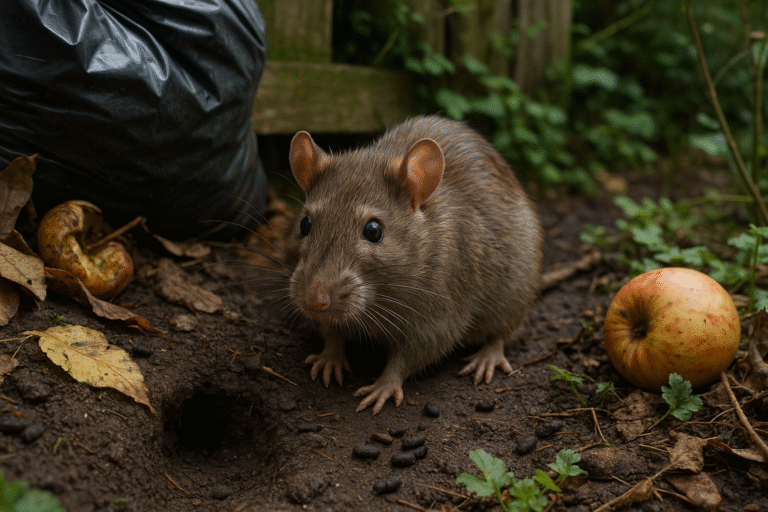
Being able to identify the signs of rats in your garden is crucial to act quickly. Typical signs include unpleasant odours, droppings, and visible runways. These signs can be an indication that rats have established themselves nearby. It's also important to look out for gnawing marks and greasy stains, which can reveal their presence.
Rats are often attracted to easily accessible food and hiding places. Falling fruit, open rubbish bags, and compost heaps can be attractive to rats. Understanding what attracts rats can help prevent their presence. It's important to keep your garden clean and ensure proper waste storage to minimise the risk of rat infestation.
Rats can multiply rapidly and spread disease, making it essential to react quickly when their presence is suspected. In addition to health risks, rats can cause significant damage to buildings and infrastructure, especially if they gain access to the sewer system. Professional help can ensure an effective and quick solution to the problem.
Once rats have established themselves in a garden, they can cause serious consequences that go beyond the immediate damage to plants and structures. Rats are known to carry a number of diseases that can be transmitted to humans and pets through direct contact or via contaminated soil and water. Their presence can also attract other pests that seek to capitalise on the same resources. Therefore, having rats in your garden is not only an aesthetic or structural concern, but also a health risk that requires quick and effective management.
To reduce the risk of rat infestation in the garden, it is important to implement effective rat-proofing strategies. This can include installing rat-proof bins and regular maintenance of outdoor areas to remove potential hiding places. Close pruning of shrubs and removal of garden rubbish piles can prevent rats from finding protected areas to build nests. In addition, it can be beneficial to inspect and repair any damage to buildings and fences that may allow rats access to protected areas.
Rats are extremely adaptable pests, making them particularly difficult to control. Their ability to survive in different environments and multiply rapidly means that a small rat population can quickly grow into a serious problem. They are also known for their ability to find alternative food sources and hiding places, necessitating a comprehensive approach to control that both addresses current infestations and prevents future ones. Pest control professionals have the knowledge and equipment needed to deal with these challenges effectively.
A sustainable approach to rat control involves not only eliminating existing rats, but also implementing long-term solutions that prevent their return. This can include the use of environmentally friendly methods, such as natural predators or biological control agents that do not harm the garden ecosystem. Furthermore, a thorough assessment of the garden layout and potential weaknesses can help develop a personalised rat-proofing plan that takes into account specific conditions and needs of the area.
Once rats have established themselves in a garden, they can cause serious consequences that go beyond the immediate damage to plants and structures. Rats are known to carry a number of diseases that can be transmitted to humans and pets through direct contact or via contaminated soil and water. Their presence can also attract other pests that seek to capitalise on the same resources. Therefore, having rats in your garden is not only an aesthetic or structural concern, but also a health risk that requires quick and effective management.
To reduce the risk of rat infestation in the garden, it is important to implement effective rat-proofing strategies. This can include installing rat-proof bins and regular maintenance of outdoor areas to remove potential hiding places. Close pruning of shrubs and removal of garden rubbish piles can prevent rats from finding protected areas to build nests. In addition, it can be beneficial to inspect and repair any damage to buildings and fences that may allow rats access to protected areas.
Rats are extremely adaptable pests, making them particularly difficult to control. Their ability to survive in different environments and multiply rapidly means that a small rat population can quickly grow into a serious problem. They are also known for their ability to find alternative food sources and hiding places, necessitating a comprehensive approach to control that both addresses current infestations and prevents future ones. Pest control professionals have the knowledge and equipment needed to deal with these challenges effectively.
A sustainable approach to rat control involves not only eliminating existing rats, but also implementing long-term solutions that prevent their return. This can include the use of environmentally friendly methods, such as natural predators or biological control agents that do not harm the garden ecosystem. Furthermore, a thorough assessment of the garden layout and potential weaknesses can help develop a personalised rat-proofing plan that takes into account specific conditions and needs of the area.
At Rattech, we provide professional rat control and prevention for both residential and commercial customers. Our experienced team is ready to help identify rat problems and implement effective solutions that protect your property and health. Contact us for an assessment and get peace of mind with our comprehensive and authorised service.
Rats in the sewer can be detected by listening for rattling sounds from drains or by seeing signs of rats around manhole covers. Professional inspection can confirm the presence.
Rats can spread diseases such as leptospirosis, salmonella and hantavirus, which can be transmitted to humans and pets through direct contact or contaminated water and soil.
Preventing rats in the garden involves removing food sources, securing rubbish bins and reducing hiding places by keeping the garden tidy and maintained.
Rats are generally larger than mice, with thicker tails and larger droppings. They also leave more visible running and gnawing marks.
Professionals can offer a comprehensive assessment, identify infestation points and implement effective strategies to eliminate rats and prevent their return.