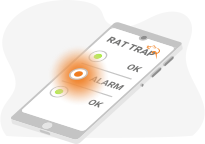
Rat problems cost businesses dearly. Invest in a digital pest solution where we actively control rats on your property.
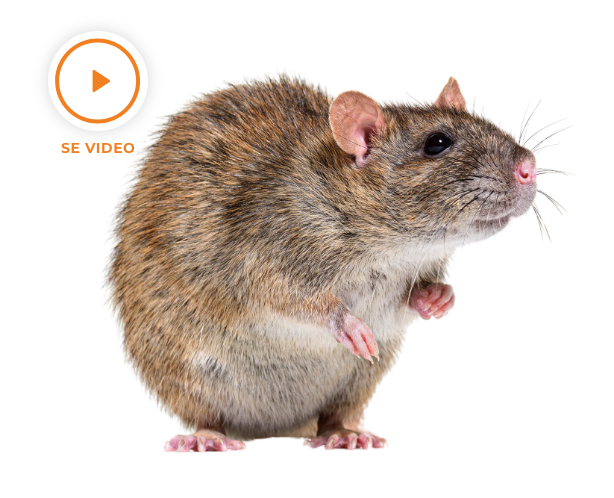
In Greve, professional rat control is crucial to protecting health and safety in local properties and sewer systems. Rats quickly become a problem if they are given the chance to establish themselves, so a structured effort is needed to handle and prevent infestations effectively. We offer solutions adapted to local conditions in Greve, focusing on both control and prevention.
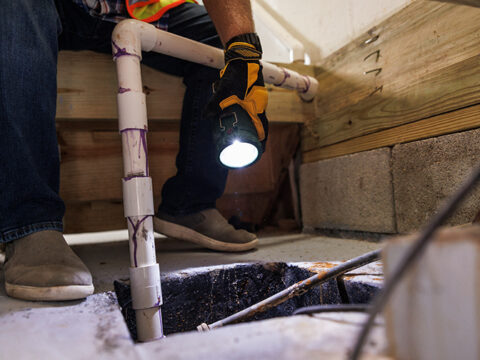
Rats are often drawn to sewer systems, where they find both food and shelter. In Greve, the local sewers can be a challenge, because rats use them as transport routes into buildings. Rat problems in the sewers can damage pipes and systems and increase the risk of disease spreading. Regular monitoring and maintenance of the sewer system is therefore important to stop rats gaining a foothold.
Prevention is an essential part of rat control, covering both proofing the structure of buildings and putting technological solutions in place. Sealing cracks and potential entry points reduces the risk of rats getting into buildings. Monitoring systems also help identify rat activity early so it can be acted on quickly. Our subscription-based solutions maintain a continuous effort against rats, giving properties in Greve the protection they need.
The sewer system is a stable environment with access to both food and shelter, and those two factors are the main reason rats establish themselves there. Deposited food waste, fat build-up and organic sludge give the animals a constant food supply, while the branching pipes offer routes throughout the system. At the same time, small breaks or leaks in the pipes create a passage to the surface, from where rats move on into buildings. When pressure varies after heavy rain, fresh nutrients are flushed in, stimulating the population further. Without targeted monitoring, this dynamic can develop quickly and spread rats to neighbouring properties.
Entry from sewer to building often happens through leaking penetrations, where rats can easily gnaw their way on into basements, service shafts or cavities behind service walls. There they damage pipe insulation, cables and ventilation, weakening the technical systems of the building and causing downtime. They also leave droppings and urine, which cause smell nuisance and increase the risk of zoonotic diseases. As the population grows, territorial behaviour leads to more hiding places, and damage spreads to load-bearing structures of timber or lightweight concrete. Over time, the cumulative strain can affect both safety standards and internal working routines in the property.
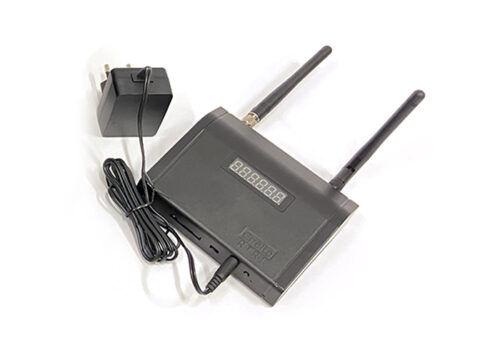
Professional control work starts with an analysis of activity patterns based on traces, sensor data and camera surveying. The aim is to map out the habitats so the effort can be targeted without overusing resources. Poison-free trap systems are then used, registering catches digitally and sending the data on to operations staff. Combining monitoring with continuous data analysis makes it possible to adjust the work precisely, so the rats breeding cycle is broken before new litters reach maturity. Putting control on a subscription footing secures continuity, because traps are checked and any change in behaviour is spotted early. That reduces the risk of recolonisation and strengthens the documentation for regulatory requirements.
Rat proofing becomes relevant once repeated observations show that rats are using the same routes into the building. That might be at foundation penetrations, defective gully pots or open ventilation cowls. Proofing consists of mechanical barriers such as rat-proof grates, non-return valves in drains and steel mesh over air penetrations. Rat-proof collars can also be used at pipe cuts to stop rats chewing their way further into the shaft. Combining these measures with regular inspection of building elements reduces the likelihood of rats finding the same route in again, even when there are temporary disturbances in the sewer flow.
Prevention targets the conditions that make an environment attractive to rats, and works best as an integrated part of how the property is run. Removing food sources, improving waste handling and ensuring correct seals in drains leaves rats with fewer reasons to stay. Sensor-based solutions give a real-time picture of activity, so operations management can make adjustments before rat numbers grow. This approach minimises the need for emergency work and makes it possible to plan maintenance so weak points in the infrastructure are put right before they become fully fledged entry gates. Prevention thus becomes a natural complement to control and proofing.
Emergency rat help is required when rat presence develops faster than existing control measures can keep up with. Sudden damage to food systems, repeated sightings in open areas or pronounced smell nuisance indicate that the colony is large or aggressive. In these conditions, the risk of operational loss and regulatory orders rises, so professional assistance must be mobilised at short notice. An emergency response includes a rapid on-site assessment, setting up additional traps and putting temporary physical barriers in place to stop further spread. The earlier help is called in, the lighter the strain on the building systems, and the easier it is to bring subsequent control and prevention back to a stable level.
Rat control in Greve takes a deep understanding of local conditions and the specific challenges properties face. Rats are drawn to urban environments with easy access to food and shelter, which makes it necessary to put both control and prevention strategies in place. Our approach focuses on combining monitoring with physical proofing to secure long-lasting results.
Prevention is a central part of rat control, where we work to minimise the factors that make an environment attractive to rats. That includes improving waste handling and making sure buildings are properly sealed. Using sensor-based monitoring systems, we track rat activity continuously and react quickly to changes. This reduces the need for emergency work and creates a more robust defence against infestation.
Sewer systems in Greve carry a significant risk of infestation, because they offer a stable environment with access to food and shelter. Rats use the sewers as transport routes into buildings, which can cause serious damage to pipes and increase the risk of disease spreading. Regular maintenance and monitoring of the sewer system is therefore crucial to stopping rats establishing themselves.
Rat proofing includes installing mechanical barriers such as rat-proof grates and non-return valves in drains. These measures stop rats entering buildings and help protect the structure of the property. By combining proofing with regular inspection and maintenance, we minimise the likelihood of rats finding their way back in, even under unforeseen conditions such as changes in the sewer flow.
Securing long-lasting protection against rats calls for a whole-picture strategy combining control, proofing and prevention. Our complete solutions include poison-free trapping systems and digital monitoring, which let us adjust the work based on real-time data. This keeps the rat population under control and prevents repeat infestations effectively.
Rats in the sewer can be detected using surveillance cameras and sensors that register activity. Signs of rats include an abnormal smell, noises from the pipes and visible damage to the sewer system.
The most common entry points for rats in buildings are leaking pipe penetrations, cracks in the foundation and open ventilation cowls. Regular inspection helps identify and seal these points.
Emergency rat help is needed when there are signs of a large or aggressive colony, such as extensive damage, repeated sightings, or pronounced smell nuisance indicating rapid spread.
Preventing infestations includes sealing buildings, handling waste correctly and installing rat-proof barriers. Monitoring rat activity with sensors also helps detect and respond to early signs of an infestation.

The impact is detected instantly and the rat can be removed within the desired time frame.

You comply with all relevant laws and regulations and get quality assurance of your rat control.

Rat control directly improves your ESG reporting.

You are joining a non-toxic and environmentally friendly pest control programme.

Signs of rats:
For at minimere risikoen for rotteangreb i ejendomme er det vigtigt at implementere systematiske forebyggelsesstrategier. Regelmæssig vedligeholdelse og inspektion af bygninger kan afsløre potentielle indgangspunkter for rotter. Dette inkluderer kontrol af fundamenter for revner, tætning af åbne ventilationskanaler og sikring af, at døre og vinduer lukker tæt. Ved at tage disse forholdsregler kan virksomheder i Greve reducere chancen for, at rotter finder vej ind i deres faciliteter.
One of the most common ways rats get into buildings is through the sewer system. That makes it essential to watch for signs of rats in the sewer. Unusual noises from the drains, slow draining or visible damage to pipes can indicate that rats are present. A professional inspection can identify these problems quickly and stop rats getting into the property through the sewer. Effective solutions such as fitting rat blockers protect the sewer system against unwanted guests.
Mens gør-det-selv rottefælder kan virke som en omkostningseffektiv løsning, er der flere fordele ved at vælge professionel hjælp til rottebekæmpelse. Professionelle har adgang til avanceret udstyr og metoder, der sikrer en mere grundig og effektiv håndtering af rotteproblemer. Desuden kan de tilbyde forebyggende vedligeholdelse og overvågning, som minimerer risikoen for fremtidige angreb. I Greve kan virksomheder drage fordel af Rattechs ekspertise og sikre varige løsninger mod rotter.
Ved akut rotteproblemer er hurtig handling afgørende for at minimere skader og sundhedsrisici. Det første skridt er at kontakte professionelle, der kan tilbyde øjeblikkelig assistance. Rattech tilbyder hurtig og pålidelig akut rottehjælp i Greve, hvilket sikrer, at problemerne bliver håndteret effektivt. Ved at vælge professionel hjælp kan virksomheder sikre, at deres ejendomme hurtigt bliver rottefri og forbliver beskyttet mod fremtidige angreb.
Signs of rats in the sewer include unusual noises from the drains, slow draining and visible damage to pipes. A professional inspection can identify these problems quickly.
Professional rat control offers a thorough, effective solution using advanced equipment and methods, plus preventive maintenance to minimise future infestations.
With an urgent rat problem, it is important to contact professionals for fast assistance. RatTech offers emergency rat help that deals with the problem effectively.