
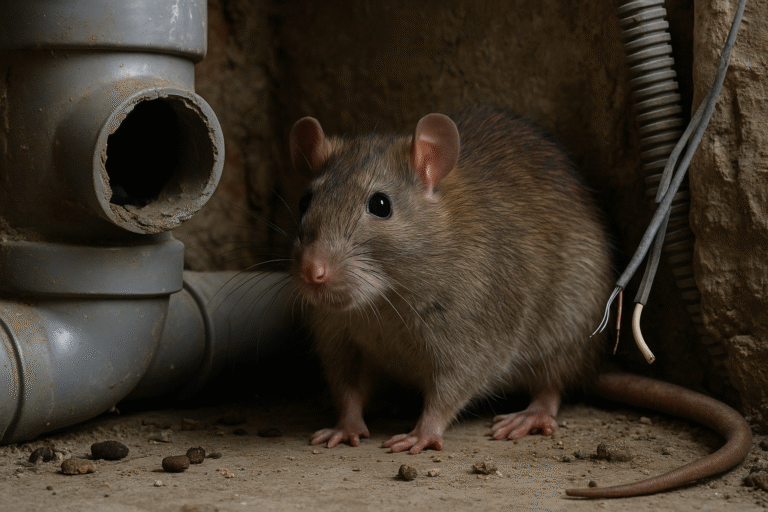
Rats are among the most problematic pests in Denmark, primarily due to their ability to spread disease and cause extensive damage. In sewer systems, rats can easily find their way into buildings through pipes and drains, posing a significant risk to both health and property. Their gnawing on pipes and electrical wiring can lead to costly repairs and, in the worst case, a fire hazard. To understand why rats are so dangerous, it's important to know about their behaviour, rapid reproduction and the diseases they can transmit to humans and pets.
Identifying signs of rat infestation early is crucial to prevent bigger problems. Some of the most common signs include noises in the walls, traces of excrement, and a characteristic unpleasant odour. In addition, damage to food and packaging can be found in the home. By being aware of these signs, you can quickly take preventative measures and contact professionals to get the problem under control before it escalates.
Effective rat proofing begins with a thorough inspection of the property to identify potential entry points for rats. There are several methods to secure the sewer system, including installing rat blockers to prevent rats from entering buildings. Maintenance of the sewer system is also an important part of prevention. In addition, it's important to be aware of current legal requirements and municipal guidelines for rat-proofing, as these can vary depending on the local area. Following these methods can significantly reduce the risk of rat infestation.
Rat infestations in sewer systems can have serious consequences, both financially and health-wise. To minimise the risk of rat infestations, it is essential to understand and implement effective prevention methods. One of the most effective strategies is the installation of rat barriers, which act as a physical barrier and prevent rats from entering the building's sewer system. These barriers are designed to allow normal water flow while blocking rat access, making them an essential component of any rat-proofing strategy.
Sewer system maintenance also plays a critical role in prevention. Regular inspection and cleaning of sewer pipes can reveal and prevent potential weaknesses that can be exploited by rats. Damage or leaks in the sewer system must be repaired quickly to prevent rats from gaining access to the system. Furthermore, proper waste management and securing rubbish bins against rats can reduce the attraction of these pests to the property, further protecting against infestation.
Rats' ability to adapt to different environments makes them particularly challenging pests to control. They are known for their intelligence and ability to learn from past experiences, enabling them to avoid traps and poisons if they have had negative experiences with these methods. This adaptability means that a one-off intervention is rarely sufficient and that continuous monitoring and adjustment of prevention strategies is necessary to keep rats at bay.
To achieve long-term success with rat control, it is important to understand their social structures and movement patterns. Rats often live in complex hierarchies and can quickly colonise new areas if not effectively controlled. By studying their behaviour and understanding how they interact with their environment, more effective strategies can be developed to prevent their return after a control effort.
Recurring rat problems can often be traced back to temporary solutions that do not address the underlying causes. To ensure a lasting solution, it's crucial to implement a comprehensive strategy that combines both preventive and control measures. This includes regular maintenance of sewer systems, installation of permanent rat barriers, and ongoing monitoring of the property for new signs of rat activity.
An integrated approach that combines technological solutions such as electronic surveillance systems with traditional methods such as physical barrier installations can provide more robust protection against rats. By understanding and applying a combination of methods that take into account rat behaviour and adaptability, you can effectively reduce the risk of rat problems re-occurring. This requires a continuous effort and adaptation of strategies to meet new challenges that rats may present.
Modern technology plays a crucial role in effective rat control. In addition to traditional methods such as rat barriers and traps, advanced electronic monitoring systems are now used to track rat activity. These systems can detect movements and alerts in real-time, allowing for faster and more targeted action. By integrating these technologies, we can better understand rat movement patterns and quickly respond to new attacks.
In addition, biological control methods that utilise natural enemies of rats to keep the population down are increasingly being used. This can include the use of predators or specific bacteria that reduce the rats' reproductive capacity. These methods are part of a sustainable approach to pest control that seeks to minimise the use of chemicals and protect the environment.
Proper waste management is a key component in preventing rat infestations. Rats are attracted to easily accessible food sources, which is why it is essential to ensure that rubbish bins are tightly sealed and not overfilled. Regular emptying and cleaning of waste containers can significantly reduce rat attraction. In addition, organic waste should be properly composted and stored away from buildings to minimise the risk of rat infestation.
Implementing waste management systems that are designed to resist rat infestation can help protect both private homes and commercial properties. This includes using robust bins and placing waste areas in a way that makes it difficult for rats to gain access. By taking these steps, we can reduce rats' access to food and therefore their incentive to stay near residential areas.
To achieve a lasting solution to rat problems, it is necessary to implement long-term strategies that combine prevention and control. This involves regular inspection and maintenance of both buildings and sewer systems to ensure there are no weaknesses that rats can exploit. In addition, there should be a focus on educating residents and staff on correct behaviour to minimise the risk of rat infestation.
By adopting an integrated approach involving both technological solutions and traditional methods, we can create robust protection against rats. This requires a continuous effort and adaptation of strategies to meet new challenges that rats may present. Such a comprehensive approach ensures that rat problems are dealt with effectively and with minimal impact on the environment.
At Rattech, we provide professional rat control and prevention for both private and commercial customers. Our experts are ready to help protect your property from rats using the latest technologies and methods. Contact us for a customised solution that fits your needs.
Rats in sewers can often be detected by professional inspection with camera equipment that can reveal signs of activity and damage in pipes and drainage systems.
Yes, there are legal requirements and municipal guidelines for rat proofing, which vary depending on the location. It is important to be aware of these to ensure compliance and effective protection.
Modern rat control utilises technologies such as electronic monitoring systems, biological control methods and advanced rat barriers to ensure effective prevention and control.