
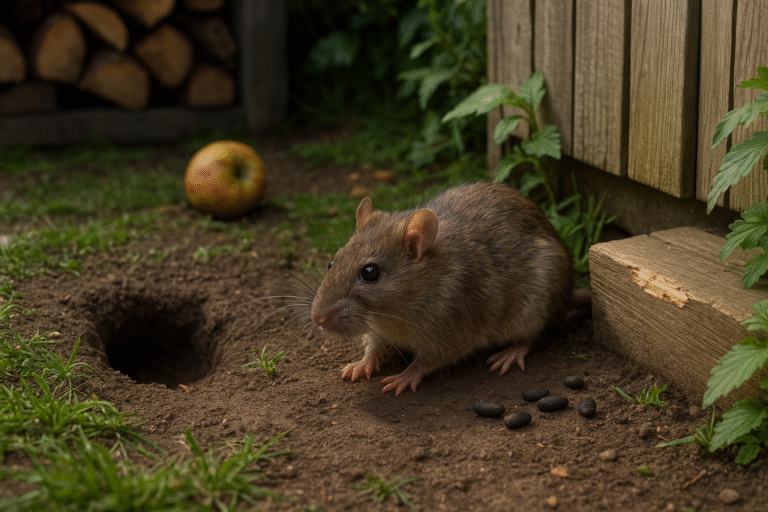
Rats in the garden can be a challenge for many garden owners as they not only damage plants and structures, but can also carry diseases. Being able to identify the signs of rats in the garden early on is crucial in order to take the necessary steps to deal with the problem effectively. Typical signs of rats include holes in the ground, gnawing marks on woodwork and visible droppings, all of which can indicate that rats have taken up residence in your garden.
Prevention is an important part of keeping rats out of your garden. Removing potential food sources is crucial; this means you should avoid leaving fallen fruit lying around and make sure compost piles are well-enclosed. It's also a good idea to store pet and bird food in tightly sealed containers. Keeping your garden tidy and free of clutter and tall grass will make it less attractive for rats to settle in.
Rats often seek shelter in places that offer them protection from weather and predators. In the garden, this can be under terraces, in sheds or in woodpiles. These areas allow rats to nest and breed without being disturbed. By ensuring that these areas are well maintained and free of cracks, you can reduce the risk of rats finding their way into your garden.
Preventing rats in the garden requires a combination of understanding their behaviour and applying practical measures. Rats are attracted to easily accessible food and safe hiding places, making it essential to minimise these factors in the garden. An effective strategy involves keeping the garden tidy and free of clutter that could act as potential nesting sites. This includes removing fallen fruit and ensuring that rubbish bins are tightly sealed to avoid attracting rats.
Food sources play a crucial role in attracting rats to your garden. Compost piles that are not properly secured can act as a tempting meal for rats, as can bird food and pet food left unattended. To reduce the risk, compost piles should be well enclosed and food should be stored in robust, tightly sealed containers. Limiting access to food minimises the chance of rats settling in the garden.
Rats are adept at exploiting even the smallest cracks and holes in structures such as sheds, terraces and woodpiles. To prevent them from finding shelter and building nests, it's important to inspect and maintain these areas regularly. Sealing cracks and holes with rodent-resistant materials can be an effective way to keep rats out. In addition, raised patios and sheds that are free of vegetation in the immediate vicinity can reduce the risk of rat infestation.
It's important for garden owners to be aware of their responsibilities in relation to rat prevention, which are often regulated by local authorities. Many municipalities have specific requirements on how to deal with rat problems, including the obligation to report rat infestations. Being aware of these regulations and acting in accordance with them is essential for effective rat control and avoiding fines. Working with local authorities can also provide access to resources and advice to help keep your garden free of rats.
Preventing rats in the garden requires a combination of understanding their behaviour and applying practical measures. Rats are attracted to easily accessible food and safe hiding places, making it essential to minimise these factors in the garden. An effective strategy involves keeping the garden tidy and free of clutter that could act as potential nesting sites. This includes removing fallen fruit and ensuring that rubbish bins are tightly sealed to avoid attracting rats.
Food sources play a crucial role in attracting rats to your garden. Compost piles that are not properly secured can act as a tempting meal for rats, as can bird food and pet food left unattended. To reduce the risk, compost piles should be well enclosed and food should be stored in robust, tightly sealed containers. Limiting access to food minimises the chance of rats settling in the garden.
Rats are adept at exploiting even the smallest cracks and holes in structures such as sheds, terraces and woodpiles. To prevent them from finding shelter and building nests, it's important to inspect and maintain these areas regularly. Sealing cracks and holes with rodent-resistant materials can be an effective way to keep rats out. In addition, raised patios and sheds that are free of vegetation in the immediate vicinity can reduce the risk of rat infestation.
It's important for garden owners to be aware of their responsibilities in relation to rat prevention, which are often regulated by local authorities. Many municipalities have specific requirements on how to deal with rat problems, including the obligation to report rat infestations. Being aware of these regulations and acting in accordance with them is essential for effective rat control and avoiding fines. Working with local authorities can also provide access to resources and advice to help keep your garden free of rats.
At Rattech, we provide professional rat control and prevention for both private and commercial customers. Our experts can help identify problem areas in your garden and suggest effective solutions to keep rats away. Contact us for an assessment and customised advice to suit your needs.
You can detect rats in your garden by paying attention to signs such as holes in the ground, gnawing marks on woodwork and visible droppings. These indications may suggest that rats have taken up residence in your garden.
Rats are attracted to food sources such as compost, bird feed and pet food that are not properly secured. It is important to store these in tightly sealed containers to minimise the risk of rat infestation.
To rat-proof your garden, inspect and maintain structures such as sheds and terraces regularly. Sealing cracks and holes and removing clutter can reduce the risk of rats finding their way into the garden.